
Last Updated: November 18, 2026
Quick Summary
To verify a plumbing licence, gather the plumber’s full name, business name and licence number, then search the official public register for your state or territory regulator. Open the record, read the status and licence class, and screenshot the result to save with your quote. A current licence should be checked before any work begins.
- Checking a plumber’s licence online takes about five minutes and costs nothing.
- Search by licence number first, then by surname and trading name if there is no match.
- A general plumbing licence does not include gas fitting, so check that class separately.
- Ask for a certificate of currency for public liability insurance and check the dates.
- If no record appears after several search attempts, do not book the job.
Table of Contents
- What You Need Before You Check a Plumber’s Licence Online
- How to Check a Plumber’s Licence Online Step by Step
- How to Check a Plumber’s Licence Number and Match the Details
- Plumbing Licence Classes and What Each One Covers
- Checking Insurance, Complaints and Disciplinary History
- Questions to Ask Before You Book a Licensed Plumber
- Frequently Asked Questions
What You Need Before You Check a Plumber’s Licence Online
Before you search, gather the plumber’s full name, business name, and licence number if they have given it to you.
You should expect a plumber to hand over their licence details before they start work.
The more detail you have, the easier the search. Have these ready:
- The plumber’s full name and surname
- The trading name or business name on the quote
- The licence number or registration number
- The suburb and the type of work being quoted
One common mistake: people search the business name only. Many plumbing businesses trade under a name that differs from the individual’s licence. Always try the person’s name as well.
How to Check a Plumber’s Licence Online Step by Step
Checking a plumber’s licence online takes about five minutes and costs nothing. You search the public register for your state or territory, enter the details, and read the result.
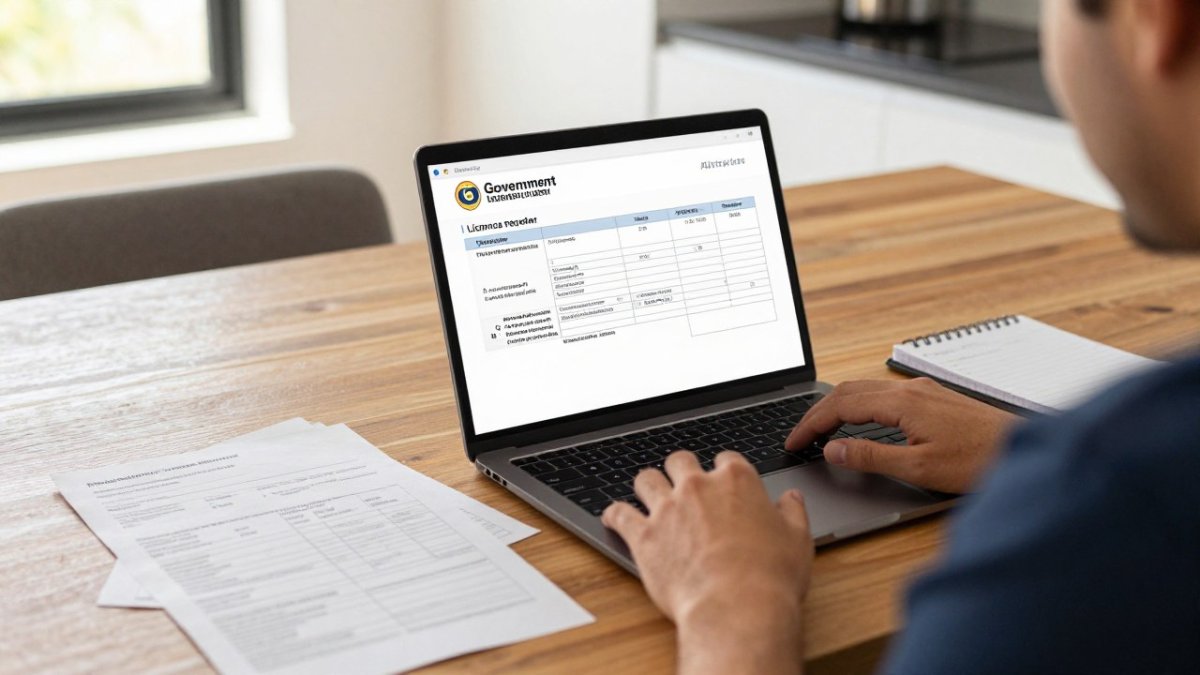
Follow these steps:
- Identify the regulator for your state or territory
- Open the official public register search page
- Choose “licence” or “registration” search
- Enter the licence number first, if you have it
- If no match, search by surname and trading name
- Open the record and read the status
- Screenshot the result and save it with your quote
Finding the Right Regulator for Your State or Territory
Each state and territory runs its own licensing authority, so the register you use depends on where the work happens. A plumber licensed in one state is not automatically licensed to work in another.
Use the official regulator’s own website rather than a third-party directory. Third-party sites can be out of date.
If a plumber cannot tell you which regulator issued their licence, treat that as a warning sign.
Reading the Search Results and Licence Status
A search result will show the licensee’s name, licence number, licence class, and status. The status is the part that matters most.
Look for these words:
- Current or active: the licence is valid today
- Expired: the licence has lapsed, so the person cannot legally work
- Suspended: the licence is on hold, often after a complaint
- Cancelled: the licence has been withdrawn
Check the expiry date too. A licence that expires next week is still current, but you want to know.
Here is the online licence check process at a glance.
| Step | What to do | Time or frequency |
|---|---|---|
| 1 | Identify the regulator for your state or territory | Once per job |
| 2 | Open the official public register search page | Once per job |
| 3 | Choose licence or registration search | Once per job |
| 4 | Enter the licence number first, if you have it | Once per job |
| 5 | If no match, search by surname and trading name | If needed |
| 6 | Open the record and read the status | Once per job |
| 7 | Screenshot the result and save it with your quote | Once per job |
How to Check a Plumber’s Licence Number and Match the Details
A licence number is only useful if the details match the person standing in front of you. Match the name, the trading name, and the licence class before you engage anyone.
Run the number through the register and compare it line by line:
- Does the surname match the person quoting you?
- Does the trading name match the business on the invoice?
- Does the licence class cover the work being quoted?
- Is the suburb or address consistent?
A mismatch is not always fraud. People change trading names, and a business may employ several licensed plumbers. But you should ask about any gap before you confirm the booking.
When the Details Do Not Match or No Record Appears
No record does not always mean no licence. Sometimes the search fails because of a spelling error, a maiden name, or a licence held under a company rather than an individual.
Try these fixes:
- Search by licence number instead of name
- Try the surname alone, without first names
- Search the trading name as well as the person’s name
- Ask the plumber which regulator issued the licence
If a record still does not appear, do not book the job. Ask the plumber to send a copy of the licence and confirm the regulator. A licensed professional will not hesitate.
Plumbing Licence Classes and What Each One Covers
Plumbing licence classes define the scope of work a person is allowed to do.
This is where a lot of homeowners get caught. Someone holds a valid plumbing licence, but it does not cover gas fitting. Then they install a gas appliance anyway.
The classes you are most likely to see on a register fall into a few groups:
- Plumber (general), covers sanitary plumbing, water supply, and drainage work on domestic and commercial properties. This is the baseline class for most household jobs.
- Plumbing contractor, a business-level licence that authorises the holder to contract for plumbing work and to employ licensed plumbers. A contractor licence is not the same as an individual plumber’s licence, and the person doing the work still needs their own licence.
- Gas fitter, authorises work on gas installations and appliances. A general plumbing licence does not include gas fitting, so always check this class separately if the job involves a gas cooktop, heater, or hot water unit.
- Roofing (plumbing), covers roof drainage, gutters, downpipes, and associated stormwater work. A general plumber may or may not hold this class.
Ask what class the licence is, and whether it covers the exact job you need. If you are booking work on your home, you can see the kind of jobs a licensed plumber should be handling on our residential plumbing services page.
Conditions and restrictions are the other half of the picture.
Watch out: a licence with conditions may still be current, but it can mean the plumber is only authorised to work under supervision or on a narrower scope than the quote implies.
Checking Insurance, Complaints and Disciplinary History
A current licence tells you the person is qualified. It does not tell you whether they carry insurance or whether anyone has complained about them.
Ask for a certificate of currency for public liability insurance and check the dates. Then look for a complaints or disciplinary record.
Most regulators publish disciplinary decisions and register complaints. Search the plumber’s name and business name against those records.
Before you commit to a booking, it also helps to understand what a call-out fee actually covers, so there are no surprises on the invoice. Our article on emergency plumber call-out fee facts breaks down the common charges.
Questions to Ask Before You Book a Licensed Plumber
Ask for the licence number, the licence class, and confirmation that insurance is current before you agree to any work.
Here is the checklist we would want a customer to run:
- What is your licence number and who issued it?
- Does your licence cover this exact type of work?
- Can you show your certificate of insurance?
- Will the person quoting be the person doing the work?
That last question matters. A plumber who stands behind the work will tell you plainly.
If you want to understand how quotes can hide extra charges before you sign, read our guide on hidden plumbing costs.
When you are ready to book, you can request an emergency plumber or contact us to ask about a quote.
Hiring a plumber should not feel like a gamble.
Frequently Asked Questions
How do I check if a plumber is licensed?
Ask the plumber for their name and licence number, then search the public register run by the plumbing regulator in your state or territory. Enter the licence number or surname and confirm the record shows a current licence, the right plumbing licence class for your job, and no conditions that restrict the work. A legitimate licence holder will give you these details without hesitation, so treat any reluctance as a warning sign.
What details do I need to check a plumbing licence number?
The licence number is the fastest way to search, but the plumber’s full name or surname and their trading or business name help you cross-check the record. Have your quote or job address nearby so you can compare the scope of work against the licence class shown. If you only have a business name, search that first, then confirm the individual practitioner named on the record is the person turning up.
Does a plumbing licence cover all types of plumbing work?
No. Plumbing licence classes set out the scope of work a licence holder is authorised to do, and some carry conditions or restrictions. A licence covering general plumbing may not extend to gas fitting, roofing or certain commercial work, so check that the class on the register matches your job. If the work falls outside their class, ask for someone who holds the right licence before any work starts.
What should I do if I cannot find a plumber on the licence register?
First, re-check the spelling of the name and the licence number, and try searching by surname or trading name instead. If no record appears, ask the plumber directly for their licence details and which regulator issued them. A genuine licence holder can explain the discrepancy. If it still does not add up, do not engage them. Search results, records and licence status are public for a reason, and an unexplained gap is a reason to walk away.


