
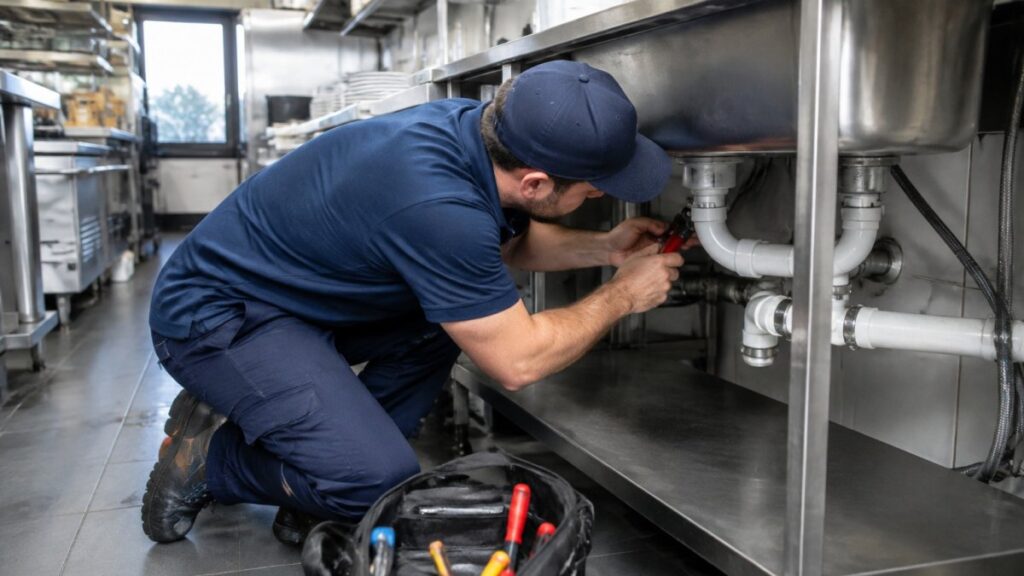
Last Updated: November 11, 2026
Quick Summary
Blocked drains, leaking pipes and failing hot water systems are the common commercial plumbing issues Sydney operators face most often, and each can shut a business within hours. A commercial plumbing fault is rarely just an inconvenience, since a backed-up floor waste halts a café kitchen and a leaking riser damages strata units.
- Stop using affected fixtures immediately and call a licensed plumber to inspect the blocked line.
- Shut off the isolation valve, dry the area and photograph water damage for your insurer.
- Low pressure across multiple outlets signals corrosion or a partial blockage in the supply line.
- Sewer smells inside a building mean a broken seal, dry trap or blocked sewer line.
- Weekly checks under sinks catch slow leaks before water damage spreads.
Table of Contents
- Commercial Plumbing Problems That Cause the Most Downtime
- Your Commercial Plumbing Maintenance Checklist
- Commercial Plumbing Regulations Every Operator Should Know
- Why Business Downtime Matters More Than the Repair
- Frequently Asked Questions
Commercial Plumbing Problems That Cause the Most Downtime
Blocked drains, leaking pipes and failing hot water systems are the common commercial plumbing issues Sydney operators face most often, and each can shut a business within hours. A commercial plumbing fault is rarely just an inconvenience: a backed-up floor waste halts a café kitchen, and a leaking riser in a strata building damages units and triggers insurance claims.
1. Blocked and clogged drains
Grease, food waste and foreign objects build up until water stops moving. Stop using affected fixtures immediately and call a licensed plumber to inspect the line.
2. Leaking pipes and fixtures
Dripping taps, failed seals and cracked pipework waste water and quietly rot cabinetry, ceilings and flooring. Shut off the isolation valve, dry the area and photograph damage for your insurer.
3. Low water pressure
Low pressure across multiple outlets signals corrosion or a partial blockage. Check whether one tap or the whole premises is affected; if building-wide, call a plumber to test the supply and inspect the line.
4. Running toilets
A running toilet wastes water continuously and drives up bills. Check the flapper or inlet valve; if a simple adjustment fails, the valve assembly likely needs replacing.
5. Hot water system failures
No hot water stops a café, gym or salon dead, and systems fail gradually through sediment build-up, failing elements or pilot faults. Check the pilot and gas supply for gas systems, or the circuit breaker for electric systems, and call a licensed plumber if the fault persists.
6. Foul odours and sewer issues
Sewer smells inside a building mean a broken seal, dry trap or blocked sewer line. Check floor wastes and rarely used drains for dry traps; if the smell persists, A professional inspection can identify problems in the sewer line.
7. Pipe corrosion
Older galvanised and copper lines corrode from the inside out, reducing flow and eventually leaking. Have pipework assessed before corrosion causes failure.
8. Backflow prevention failures
Backflow prevention devices stop contaminated water flowing back into the clean supply; a failed test can cost compliance and, in some cases, water supply. Have devices tested regularly by a licensed plumber and keep test reports on file.
Your Commercial Plumbing Maintenance Checklist
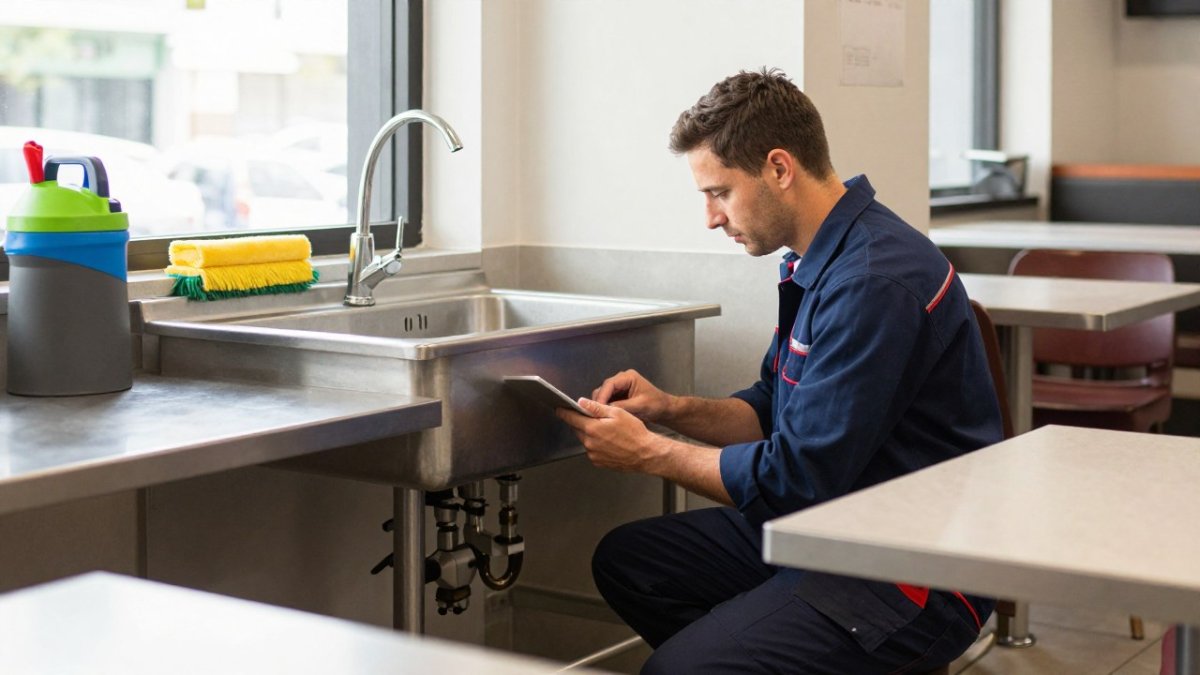
A preventative maintenance schedule catches faults before they become emergencies. Recommended checklist for Eastern Suburbs commercial property:
| Frequency | Task | Why it matters |
|---|---|---|
| Weekly | Check under sinks and around fixtures for leaks or damp | Catches slow leaks before water damage spreads |
| Monthly | Test isolation valves and check floor wastes for odour | Confirms shut-off works and traps are sealed |
| Annually | Backflow prevention device testing and pipework assessment | Maintains compliance and flags corrosion early |
Preventative maintenance is the biggest lever against downtime, a scheduled inspection costs far less than an emergency call-out and lost trading hours.
Commercial Plumbing Regulations Every Operator Should Know
Commercial plumbing work is subject to regulations covering installation, backflow prevention, trade waste and water efficiency, and operators are responsible for meeting them. Work must be done by licensed plumbers.
- Licensed work only: All plumbing and gas fitting must be done by licensed tradespeople.
- Backflow prevention: Devices must be tested and maintained to protect the water supply.
- Trade waste: Businesses such as cafés and restaurants may need a trade waste agreement with their water authority.
- WHS risk: Plumbing faults that create slips, scalds or contamination are a workplace safety matter.
For current requirements, check with your local council and water authority. You can also review the Australian Building Codes Board for plumbing standards that apply to your premises.
Why Business Downtime Matters More Than the Repair
Every hour of downtime costs revenue, wages and goodwill, a blocked drain closing a kitchen for a day can cost far more than the repair.
When a plumbing fault threatens to close your doors, you need a licensed team that turns up when they say they will. Greenaway Plumbing brings 20 years of experience, fully licensed plumbers and certified gas fitters, and 24/7 emergency response across the Eastern Suburbs.
Frequently Asked Questions
What are the most common plumbing problems in commercial buildings?
Blocked drains, leaking pipes and fixtures, low water pressure, running toilets, hot water system failures, foul odours from sewer lines, pipe corrosion and backflow prevention failures. Commercial sites tend to hit these harder than homes because of heavier traffic, grease, trade waste and older infrastructure. A commercial plumbing maintenance checklist that covers drains, fixtures, the hot water system and backflow devices will catch most of them before they cause business downtime.
How often should commercial plumbing be inspected?
Most commercial properties benefit from an inspection every six to twelve months, with high-use sites such as cafes, restaurants and multi-unit buildings checked more often. A preventative plumbing maintenance for businesses schedule should also include CCTV drain inspection of the sewer line and testing of backflow prevention devices at the intervals your council and insurer require. Regular leak detection and water pressure checks between inspections catch faults early.
Who is responsible for commercial plumbing maintenance in a leased property?
It depends on the lease. Generally the tenant handles day-to-day plumbing repairs and fixtures, while the owner covers the base building infrastructure such as the sewer line and main water supply. Strata and facility management arrangements can shift this further. Read the maintenance clause before signing, and agree in writing who arranges and pays for preventative maintenance so a plumbing fault never becomes a dispute.


