
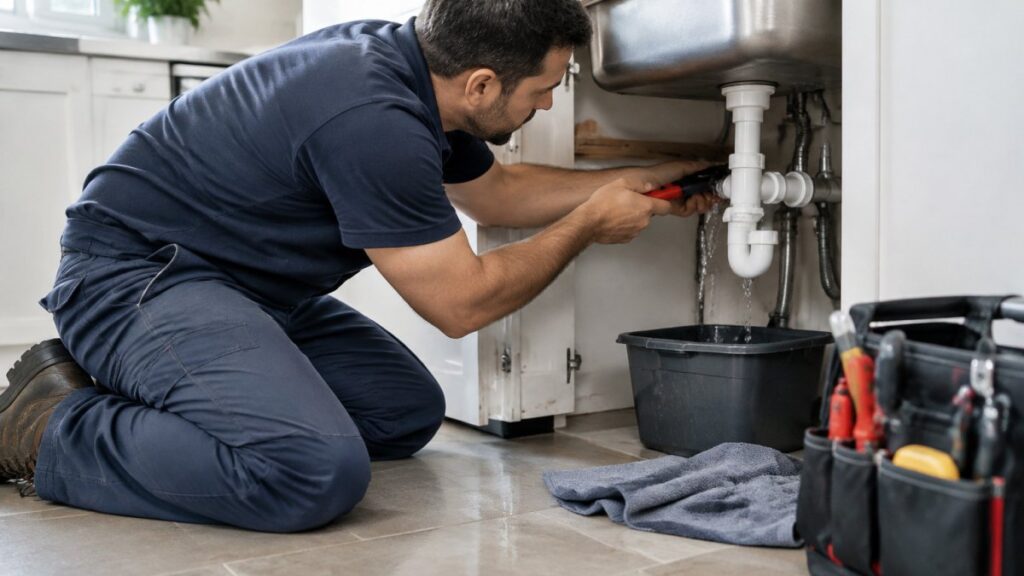
Last Updated: November 20, 2026
Quick Summary
Emergency plumbing response time expectations describe how long it takes from your first call to a licensed plumber arriving at your door. No plumber can promise an exact minute, because traffic, demand and distance all shift the number, so ask for a clear arrival window instead of a vague promise.
- Active flooding or a burst pipe is highest priority, often with arrival under 1 hour.
- Sewage backups typically arrive in 1 to 2 hours, while no hot water takes 2 to 4 hours.
- Ask for dispatch time, arrival time and repair start time as three separate estimates.
- Write down the arrival window, the name of the person you spoke to and a contact number.
- If you smell gas, leave the building and call your gas distributor from outside.
Table of Contents
- What Emergency Plumbing Response Time Expectations Really Mean
- Typical Emergency Plumber Arrival Time Ranges
- Factors That Affect Emergency Plumbing Response Time
- What to Do While Waiting for an Emergency Plumber
- Your Plumbing Emergency Checklist
- How to Verify an Arrival Estimate and Handle Missed Windows
- Safety Steps for Gas, Electrical, Sewage, and Contaminated Water
- Calling Greenaway Plumbing for Urgent Repairs
- Frequently Asked Questions
What Emergency Plumbing Response Time Expectations Really Mean
Emergency plumbing response time expectations describe how long it should take from your first call to a licensed plumber arriving at your door. At Greenaway Plumbing, we know this wait feels much longer when water is pooling on the floor.
Here is the honest truth. No plumber can promise an exact minute. Traffic, demand and distance all shift the number.
But you deserve a realistic picture, not a sales pitch.
Below, we explain what each stage of the wait actually means. We also show you how to protect your home in the meantime.
Emergency plumbing is the urgent repair of burst pipes, blocked drains, gas leaks and failed hot water systems, usually outside normal business hours. A good response starts with a clear arrival estimate, not a vague promise. This guide to emergency plumber call-out fee facts explains the charges that come with a callout.
Dispatch Time vs Arrival Time vs Repair Start Time
Three different clocks run during a callout. Mixing them up causes most of the frustration.
- Dispatch time: how quickly a plumber is assigned and leaves the depot.
- Arrival time: when that plumber reaches your property.
- Repair start time: when the actual fix begins after inspection.
A fast dispatch does not always mean a fast repair. The plumber may need parts or a second technician. Ask for all three estimates when you call.
Typical Emergency Plumber Arrival Time Ranges
Arrival times for urgent calls vary with your location, the time of day and how busy the night is, so no fixed window can be guaranteed. Ask the dispatcher for an estimate for your specific job.
| Situation | Typical Arrival Window | Priority Level |
|---|---|---|
| Active flooding or burst pipe | Fastest available, often under 1 hour | Highest |
| Sewage backup in the home | 1 to 2 hours | High |
| No hot water or slow leak | 2 to 4 hours | Medium |
| Non-urgent repair request | Next business day | Low |
The key is to ask what window applies to your job when you ring. A clear estimate beats a hopeful guess.
What Sits Behind an Arrival Estimate
A useful estimate is really a range with assumptions attached. When a dispatcher says “one to two hours”, they are usually weighing four things: the distance from the nearest available technician, the current queue of jobs, the time of day, and whether your issue is likely to need parts or a second trade. Ask which of those is driving your number. If the answer is “we are busy tonight”, you can reasonably expect the upper end of the range.
A common pattern is for providers to quote their best-case window on the phone and then revise it once the job is logged. That is not dishonesty so much as optimism. You can protect yourself by writing down the window and asking what would cause it to change.
Service-Area Limits and Rural Realities
Response times stretch sharply outside dense service areas. A provider that covers a metropolitan ring may still quote two to three hours for an outer suburb, and longer for rural or regional addresses where the nearest licensed plumber is genuinely far away. Severe weather, road closures and overnight staffing all add to that. If you live outside a provider’s core area, ask directly whether they service your address and what window they can realistically hold.
Why a Single Headline Promise Is Misleading
The honest position is that response time is uncertain and depends on factors outside anyone’s control. When you compare providers, compare the assumptions they attach to their windows, not just the headline number. A provider that says “one to three hours, depending on demand and distance” is giving you more useful information than one that says “fast”.
Watch out: a very short quoted window can be a sales tactic rather than an operational commitment. Ask what happens if the window is missed and whether you will be called with an update.
Factors That Affect Emergency Plumbing Response Time
Several things decide how fast a plumber reaches you. Knowing them helps you set fair expectations and plan your call.
Location, Time of Day, and Demand
Distance from the technician to your property is a major factor in arrival time. Check whether your suburb falls inside the provider’s service area before you assume a fast arrival. You can check whether your area is covered if you are unsure.
Time of day matters just as much. Overnight calls and public holidays often mean fewer technicians on the road. Storm events spike demand across the whole city at once.
Call volume is the wild card. When fifty homes flood at once, even a well-staffed team gets stretched. Ask the dispatcher how busy the night is.
Problem Severity and Priority Triage
Not every call gets the same urgency. A good plumber triages jobs by risk to people and property.
- Active flooding or burst pipe: top priority, immediate dispatch.
- Sewage backup: high priority, health hazard.
- Gas smell: treated as an emergency, call your gas network first.
- Dripping tap or slow drain: booked as a standard job.
Be honest about severity when you call so the right priority can be assigned.
What to Do While Waiting for an Emergency Plumber
Use the wait to limit damage. The first job is always to stop the flow of water if it is safe to do so.
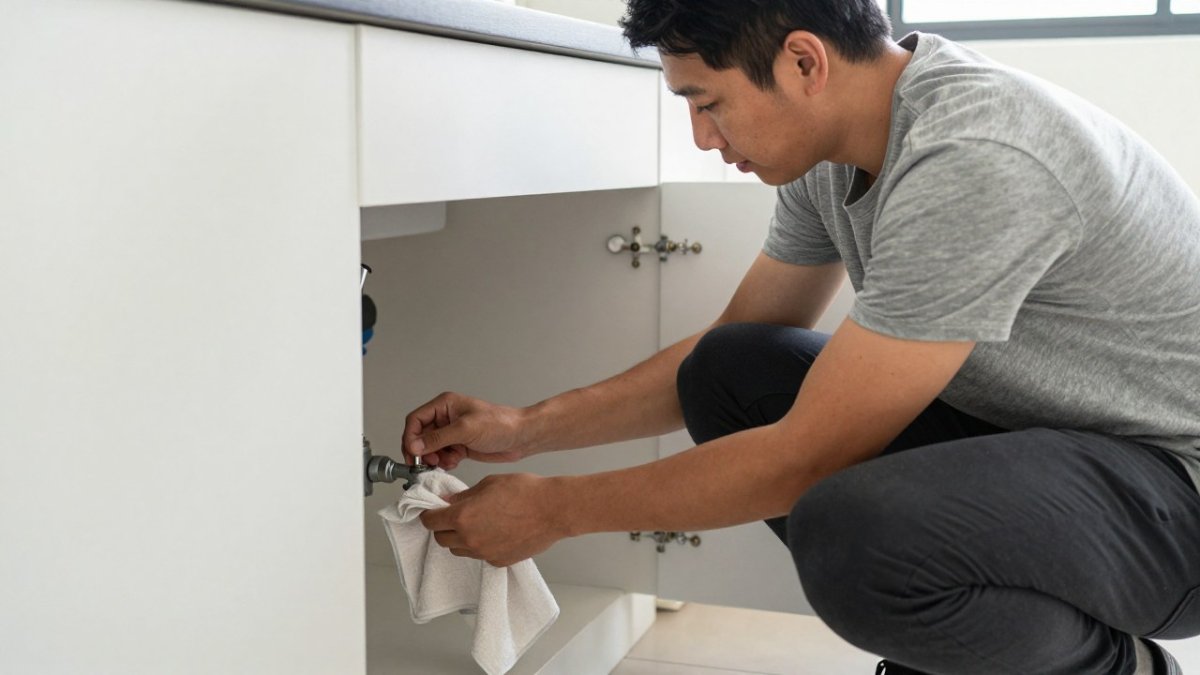
Turn off the main water valve if a pipe has burst. Move furniture and electronics away from wet areas. Soak up standing water with towels to reduce slip risk.
Then collect useful details for the plumber:
- Where the leak or blockage starts
- Whether water is clean or dirty
- Any recent work done on the pipes
- Your access details, such as a gate code
It also helps to understand what the bill might include while you wait. This guide to hidden plumbing costs explains the charges that can catch homeowners off guard.
Your Plumbing Emergency Checklist
A short checklist keeps you calm and helps the plumber work faster. Run through these steps the moment something goes wrong.
- Shut off the main water valve if water is escaping
- Switch off power to any wet electrical area at the board
- Open doors and windows if you smell gas, then leave the building
- Move valuables and furniture clear of the water
- Place buckets under drips and lay towels on slippery floors
- Take photos of the damage for insurance or your landlord
- Note the time you first called and the arrival estimate given
- Keep children and pets away from the affected area
This checklist works for renters, owners and property managers alike. Print it and keep it near the fuse box.
How to Verify an Arrival Estimate and Handle Missed Windows
Always ask for a time window, not a single time. A window of “between 8 and 10pm” is far more useful than “soon”.
Write down three things when you call:
- The name of the person you spoke to
- The arrival window they gave you
- A contact number for updates
If the window passes, ring back and ask for a new estimate. A missed window is frustrating, but a quick update usually resolves it. You can contact the team directly to confirm your window or follow up on a delay.
Watch out: never let a plumber start work without a written quote or clear verbal estimate first. Surprise charges are the most common complaint homeowners raise.
Safety Steps for Gas, Electrical, Sewage, and Contaminated Water
Some plumbing emergencies carry real danger. Treat these with extra care and do not try to fix them yourself. The first decision is whether this is a life-safety emergency or a plumbing emergency. If there is fire, a strong gas smell, smoke, or someone is injured, call 000 first, then deal with the plumbing.
A Quick Severity Triage
Use this order of thinking before you call a plumber:
- Immediate danger to people: gas smell, smoke, sparking, or water near live electrical fittings. Evacuate, call 000, and only then contact the gas distributor or plumber.
- Serious property risk: active flooding, sewage entering living areas, or water soaking into ceilings. Shut off water or power if safe, then call an emergency plumber.
- Contained nuisance: a slow leak, a dripping tap, or a blocked drain with no overflow. Book a standard appointment.
This triage matters because it stops a small issue from being overstated and a dangerous one from being understated. Be honest about which category you are in when you call.
Gas Leaks
If you smell gas, do not touch light switches, do not use a phone inside, and do not light anything. Leave the building and call your gas distributor’s emergency line from outside. Only a certified gas fitter should work on gas lines (Gasfitters). If the smell is strong or you feel unwell, call 000.
Electrical Risk
Water near power points or a switchboard is a shock hazard. Turn off power at the main board only if it is safe to reach and you are not standing in water. Otherwise stay clear and wait for a licensed electrician or plumber. Do not reset a tripped safety switch repeatedly if it keeps tripping.
Sewage and Contaminated Water
Raw sewage carries bacteria. Wear gloves and gumboots, keep children and pets away, and wash thoroughly after any contact. Do not try to clear a sewage backup by hand. Leave the clean-up to a professional, and treat any water that has mixed with sewage as contaminated.
Hidden Leaks and Structural Risk
Water soaking into walls or ceilings can weaken structures. If you see sagging plaster, bubbling paint, or a ceiling that feels soft, treat it as urgent and keep people out of the room. A hidden leak can also feed mould, which is a longer-term health issue.
For legal and safety guidance on gas and electrical work, check the official consumer safety information from the Australian Government. Licensed trades must handle anything involving gas or fixed wiring.
Watch out: never re-enter a building with a strong gas smell to retrieve belongings. Leave it to the emergency services.
Calling Greenaway Plumbing for Urgent Repairs
When a pipe bursts at 2am, you need a plumber who answers and turns up. That is exactly what we do.
At Greenaway Plumbing, our fully licensed plumbers and certified gas fitters are available 24/7 across the Eastern Suburbs. We aim to give honest arrival estimates and keep you informed.
If you need help now, book an emergency plumber and we will confirm your window straight away.
So what should you expect from emergency plumbing response time expectations? A clear window, honest updates, and a licensed professional who protects your home.
A burst pipe or blocked drain rarely waits for a convenient moment. Neither should you. Greenaway Plumbing offers 24/7 emergency service, fully licensed plumbers and certified gas fitters, and clean, house-trained staff who respect your home. We have served the Eastern Suburbs for over two decades and give honest assessments before any work starts. Get started with Greenaway Plumbing and get a licensed plumber on the way to your door.
Frequently Asked Questions
How quickly should an emergency plumber respond?
Arrival times depend on your location, the time of day and current call volume. Ask Greenaway Plumbing for an estimate for your specific job. During peak periods or overnight, arrival can extend further. When you call, ask for a specific arrival estimate and confirm whether the plumber is already in your area. A reputable provider will give you a realistic window rather than an optimistic guess.
What affects an emergency plumber’s response time?
Several factors influence emergency plumber arrival time: your distance from the nearest available technician, traffic conditions, time of day, current call volume, and the severity of your plumbing issue. Active flooding or a burst pipe usually takes priority over a slow leak. Weather events and suburb density also play a role. Access arrangements at your property can add time, so mention any access codes when you call.
What should I do while waiting for an emergency plumber?
Shut off the main water valve if you have a leak or burst pipe, and switch off electricity to affected areas at the switchboard if water is near power points. Move valuables and furniture away from the water, place towels or buckets to contain the spread, and take photos for insurance. Avoid using drains or flushing toilets if there is a sewage backup. Keep your phone nearby and stay in a safe, dry area until the plumber arrives.
When should a plumbing problem be treated as an emergency?
Treat a plumbing issue as an emergency when it poses a safety risk or causes rapid property damage: active flooding, burst pipes, sewage backup, gas smells, no water supply, or a failed hot water system in cold weather. A dripping tap or slow drain can usually wait for a standard service call. If you are unsure, call and describe the problem; a licensed plumber can help you decide whether immediate attendance is needed or whether it can be scheduled.


